
ALS is often referred to as a disease where you lose someone gradually, but they are still present. Still here, just physically challenged. What do you do when ALS strikes not just the body but the mind as well? Not only do you lose the physical person, but you also lose their essence as a person. You lose their personality, humor, thoughts, memories, and even their love.
The families suffer double the assault, and the individual suffers exponentially. Not understanding why their body is failing. You see, just yesterday, or even 5 minutes ago, they were able to walk. What is this form of ALS that strikes the entire person?
Frontotemporal dementia (FTD). FTD is a rare neurodegenerative disease that causes nerve cells in the brain to lose their ability to function over time.
- FTD can result in changes to a person’s behavior and personality, as well as impair their verbal and physical abilities.
- For those watching FTD symptoms progress in a family member, it can feel like their loved one is slipping away.
- FTD can cause a person to act out of character.
- People living with FTD often display indifference or behave inappropriately in social situations.
- Because of this, FTD is often misdiagnosed as a mental illness, considered a midlife crisis, or a different form of dementia.
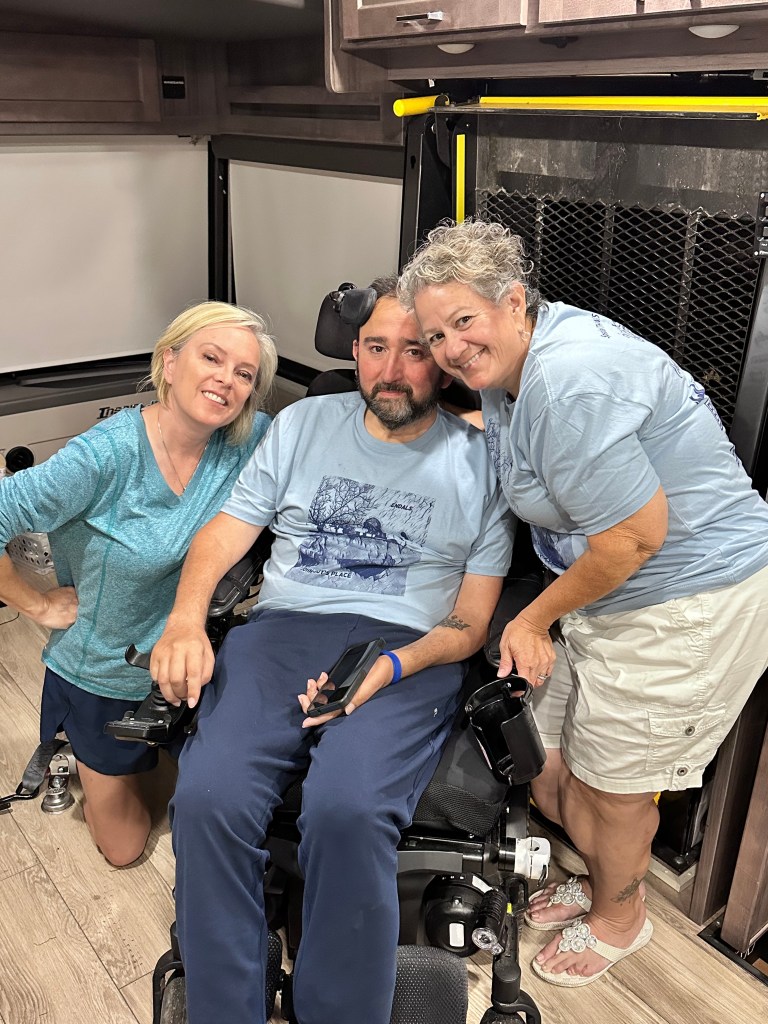
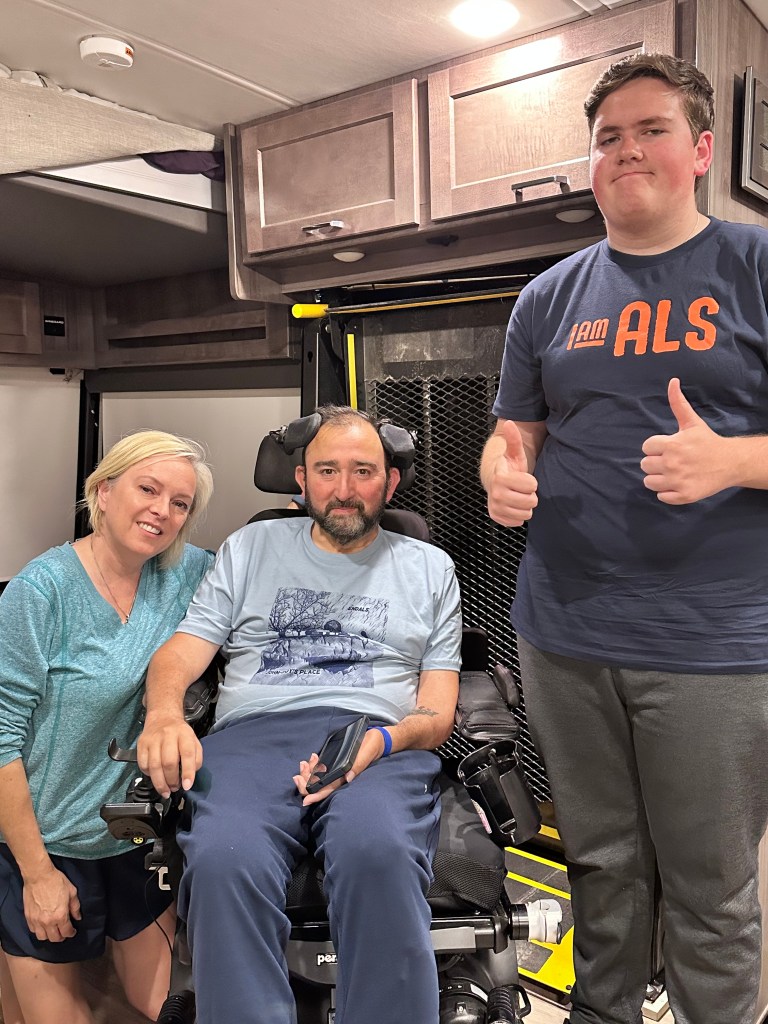
Meg and I had the privilege of meeting Elin Adcock and her son Gabe on this trip. They lost their husband and father, Larry, to ALS and FTD. I did not understand FTD before, but I also didn’t realize how little I knew. More importantly, the insidious nature of it. Elin, thank you for sharing so candidly, Meg and I are forever grateful.
Where to begin? This is the issue with FTD and ALS. You simply don’t know where either begins. Both are frequently misdiagnosed for other conditions. Delaying treatment, of which there is none for either. Most importantly, losing precious time. What struck me more than anything as Elin shared their experience were the tell-tale signs that presented so innocuouslly. Mismatched memories, gradual changes in habits, and thought processes.
These altered states of being are cumulative until major incongruencies in behaviors present themselves. Even then, misdiagnosis occurs.
The husband and father that Elin and Gabe knew gradually changed. Then, the changes became concerning. Larry began combining memories of scenarios that could have been a part of his past but, in fact, were not. Elin continued to argue with neurologists who were set on other conditions. She knew something different was at play.
The culmination was an incident where her loving and gentle husband expressed thoughts that were so far-fetched. She couldn’t ignore them. Soon after, he was, in fact, diagnosed with ALS and FTD.
Elin, like so many, can retrospectively identify the signs that presented so stealthily. She shared that those minute changes were shrugged off, well, because people can change. Even life-long habits and idiosyncrasies can alter later in life as we grow.
Toward the final days of his life, Larry could not understand speech nor speak himself. He was surrounded by his family, unaware of the love that was present, but it was there.
Now, Erin, Gabe, and the entire family are enduring their loss moment by moment. Holding Larry in their hearts as they move through their grief .
Thank you again, Elin and Gabe, for sharing a bit of your heart with us.
TJO

 Life On The Road with ALS
Leave a reply to Elin Adcock Cancel reply